
Land for Those Who Work It: The Ejido System (1938–Present)
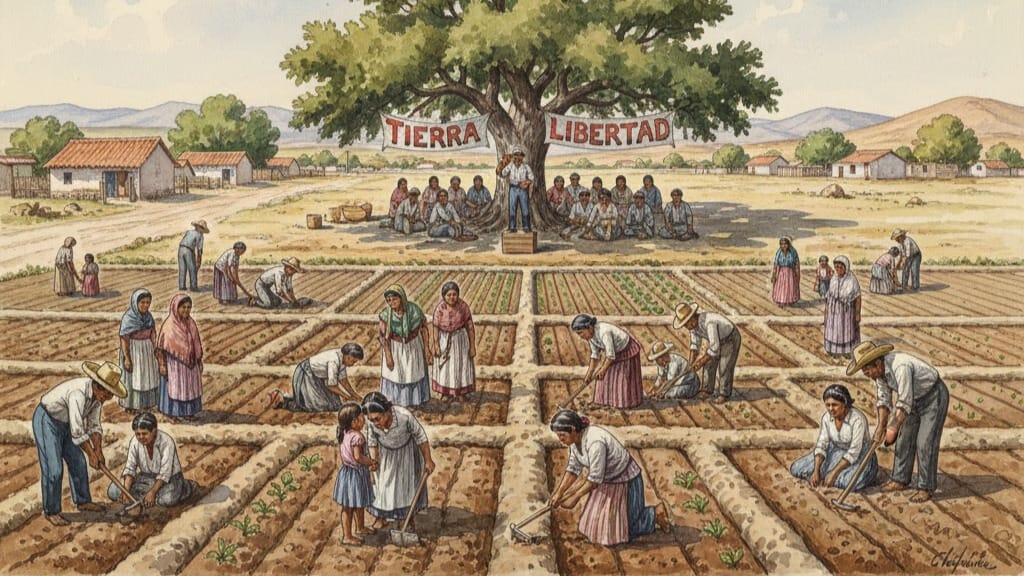
In 1937, something revolutionary happened in La Misión—literally. The Mexican Revolution’s famous promise of "Tierra y Libertad" (Land and Liberty) finally arrived. After decades of land being owned by just a few wealthy ranching families, the government gave a group of local people permission to start Ejido La Misión. This changed everything about how people lived, worked, and owned land in our valley.
What Exactly is an Ejido?
An ejido is a uniquely Mexican way of owning land. It doesn't really exist in the U.S. or Europe. Think of it as a middle ground between owning a house and sharing a park. Here is how it works:
- Communal Ownership: The land is granted by the government to a group of people called ejidatarios.
- Right to Work: Individual families are given specific plots to farm or build a house on, but they don't "own" the dirt in the traditional way—they can't just sell it to a stranger on a whim.
- Inheritance: You can pass the right to use the land down to your children, keeping the farm in the family for generations.
- Shared Space: Large areas of the ejido remain "common land" where everyone can graze cattle or gather firewood.
Why Did Mexico Create This System?
Before the Mexican Revolution (1910), most land in Mexico was owned by massive estates called haciendas. The people who actually did the hard work of farming owned nothing and could be kicked off the land at any time. Revolutionary leaders like Emiliano Zapata fought to change this, arguing that the land should belong to "those who work it with their own hands." The ejido system was the solution to make sure farming families had a permanent, secure home.
Life in Ejido La Misión
When the ejido was formed in 1938, it took over much of the old Crosthwaite ranch. Suddenly, families who had been employees were now their own bosses.
Life in the mid-1900s was all about subsistence—growing what you need to survive. Families grew corn, beans, and vegetables, and they caught fish in the estuary. It was a life of hard work and dignity. Decisions weren't made by a boss, but by the Asamblea (a community meeting) where every ejidatario had a vote.
The Big Change in 1992
For over 50 years, ejido land could never be sold to outsiders. But in 1992, the Mexican government changed the law. They allowed ejidos to vote on whether they wanted to "privatize" their land.
This was a huge turning point for La Misión. Privatization meant that an ejidatario could turn their plot into a private title and sell it to anyone—including developers or international buyers.
This created two different paths for the land:
- The Village: Much of the center of La Misión stayed as part of the ejido, keeping its traditional Mexican character and local families.
- The Developments: Other areas (like the land where the LMPOA gated community sits) were privatized and sold, leading to the modern homes and vacation rentals we see today.
A Complicated Legacy
Today, La Misión is a "hybrid" community. You have long-time local families whose grandfathers fought for the right to farm this soil, living alongside newer residents who bought their property on the open market.
The ejido system is the reason our valley still has so much open green space and a strong sense of local culture. While the ranchos brought the families here, the ejido gave the community the power to stay.
Why It Matters Today
When you visit the local shops or walk through the village, you are in the heart of the ejido. Understanding this history helps us respect our neighbors. The families who have lived here since 1938 aren't just "locals"—they are the protectors of a revolutionary dream. By supporting local businesses and respecting the community’s shared spaces, we help keep that 12,000-year-old connection to the land alive.