When Earth Built Paradise

When Earth Built Paradise

Baja California - The beginning of time.

When Earth Built Paradise: The Geological Story of La Misión

Standing on Playa La Misión with your toes in the sand, it’s easy to think you’re just looking at a pretty beach. But beneath your feet is one of the most incredible geological stories in North America. The landscape of La Misión is a 100-million-year-old masterpiece created by volcanic eruptions, massive tectonic collisions, and the Earth literally tearing itself apart.

The Age of Dinosaurs: Building the Foundation

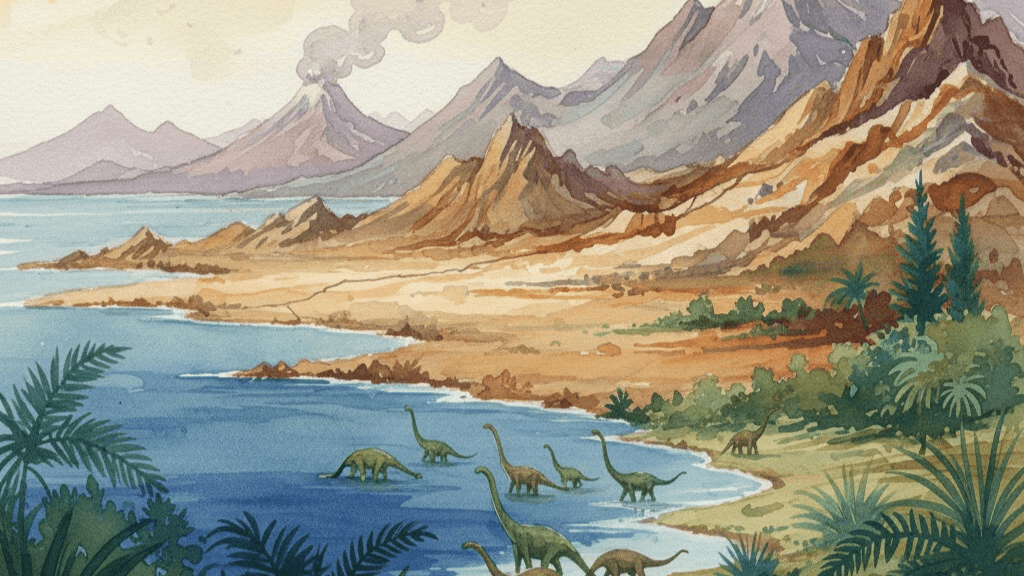
Our story starts about 100 million years ago when dinosaurs still roamed the earth. At that time, an oceanic plate was sliding deep beneath the North American plate. This process, called subduction, created intense heat and pressure. This pressure triggered chains of volcanoes that built the "backbone" of Baja California—the rugged mountains we see on the horizon today.

Volcanic Fire: Shaping the Flat-Topped Mesas

Between 25 and 12 million years ago, a new wave of volcanic activity began. Thick layers of lava flowed across the land and hardened into a protective cap. Over millions of years, wind and rain washed away the softer surrounding dirt, but the hard volcanic rock stayed behind. This created the famous flat-topped hills, called mesas, that make our local landscape look so unique.

The Great Rift: When Baja Was Born

About 12 million years ago, the geology changed. The land began to tear away from mainland Mexico in a process called rifting. This giant crack in the Earth eventually filled with water, creating the Gulf of California. Because of this rift, Baja California is actually moving northwest toward Alaska at about two inches per year—roughly the same speed your fingernails grow!

Ancient Treasures: Sea Shells in the Hills

If you hike the hills east of the beach, you might find something surprising: sea shells and shark teeth. These hills were once the bottom of the ocean. Over millions of years, the earth was pushed upward by tectonic forces, lifting the ancient seafloor high into the air. You can also see coastal terraces, which look like giant steps rising from the beach. Each "step" represents where the sea level sat thousands of years ago.

The River That Carved Paradise

The Río Guadalupe didn't appear by accident. Over thousands of years, the river acted like a giant saw, cutting through layers of volcanic rock to create the valley we live in today. As it cut the canyon, the river carried "ground-up mountains"—rich minerals and silt—down to the valley floor. This fertile soil is the reason agriculture thrives here and why humans have been drawn to this spot for millennia.

A Landscape Still in Motion

The story of La Misión isn’t over. The forces that built this place are still active today. Earthquakes occur because the peninsula is still on its journey north. The waves are constantly carving new cliffs, and the river continues to carry the mountains to the sea, one grain of sand at a time. We are just temporary guests on a landscape that is constantly evolving.

Why It Matters

Understanding geology changes how you see a simple morning walk. That dark, jagged rock on the hillside? That’s ancient lava. That spiral-shaped fossil you found? That’s a creature that lived when this land was underwater. We live in a place built by fire, water, and deep time, reminding us to respect the powerful forces that continue to shape our home.
The First Stewards

The First Stewards

Baja California - The beginning of time.

The First Stewards: 12,000 Years of Kumeyaay History

Long before Spanish ships arrived or modern maps were drawn, the Kumeyaay people lived in La Misión. To understand how long they've been here, consider this: when the ancient Egyptians were just starting to build the first pyramids, the Kumeyaay had already lived in Baja for over 7,000 years.

A Name Based on the View

The name Kumeyaay (or Kumiai) basically means "those who face the water from a cliff." If you’ve ever stood on the tall bluffs overlooking Playa La Misión, you’ve seen exactly what they saw. Their land was huge, stretching from San Diego all the way south to Ensenada and east to the Colorado River.

They Weren't Just Living in Nature—They Were Managing It

A common mistake people make is thinking that indigenous groups just "wandered around" looking for food. The Kumeyaay were actually expert environmental engineers. They didn't just take what the land gave them; they improved the land using techniques we are still studying today:

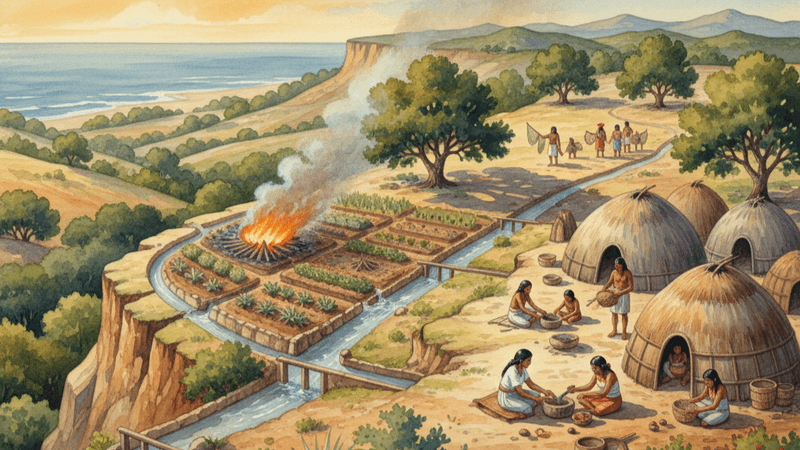
  • Controlled Burns: They intentionally set small fires to clear out dead brush. This prevented massive wildfires and helped new plants grow, which attracted deer and rabbits for hunting.
  • Water Engineering: They built small dams and terraces in the hills to slow down rainwater. This stopped the soil from washing away and kept the ground moist for growing grains.
  • The First Farms: When Spanish explorers first saw the lush green valleys of California, they thought it was "wild" nature. In reality, they were looking at massive, carefully managed grain fields planted by the Kumeyaay.

Moving with the Seasons

The Kumeyaay didn't stay in one spot all year. They used a system called seasonal movement. In the summer and fall, they moved into the mountains where it was cooler to harvest acorns and pine nuts. In the winter, they moved down to the coast to fish and collect shellfish while the weather was mild. This gave the land time to heal and regrow every year.

The Kumeyaay "Supermarket"

The Kumeyaay diet was incredibly healthy and diverse. Their most important food was the acorn. Women would gather acorns by the thousands, grind them into flour using heavy stones, and make a nutritious mush called shawii. They also ate chia seeds, cactus fruit, wild onions, and seafood. They knew exactly which plants could be used for food and which were medicine.

Science and Culture

The Kumeyaay were skilled astronomers. They used stone markers to track the stars and the sun. This "rock calendar" told them exactly when the seasons were changing so they knew when to move camp or plant seeds. They also have a musical tradition called Bird Songs. These songs are like oral history books, telling the story of the people and how to treat the earth with respect.

A Difficult History

When Europeans arrived, life changed drastically. The Mission system forced the Kumeyaay to stay in permanent settlements. New diseases like smallpox killed up to 90% of their population. It was a devastating time that almost wiped out their way of life.

The Kumeyaay Today

Despite these hardships, the Kumeyaay are still here. Today, descendants in Baja and Southern California are keeping their language alive, teaching traditional basket weaving, and working to protect sacred sites and ancient artifacts.

Why It Matters to You

When you hike the trails or walk the beach at La Misión, you are walking through an ancient home. If you see a smooth, bowl-shaped hole in a rock, that’s a bedrock mortar where someone ground acorns hundreds of years ago. The Kumeyaay prove that humans can live in a place for 12,000 years without destroying it. They remind us that if we take care of the land, the land will take care of us.

Mission Bells and Adobe Dreams

Mission Bells and Adobe Dreams

The Spanish Colonial Period (1787-1834)

Mission Bells and Adobe Dreams: The Spanish Period (1787-1834)

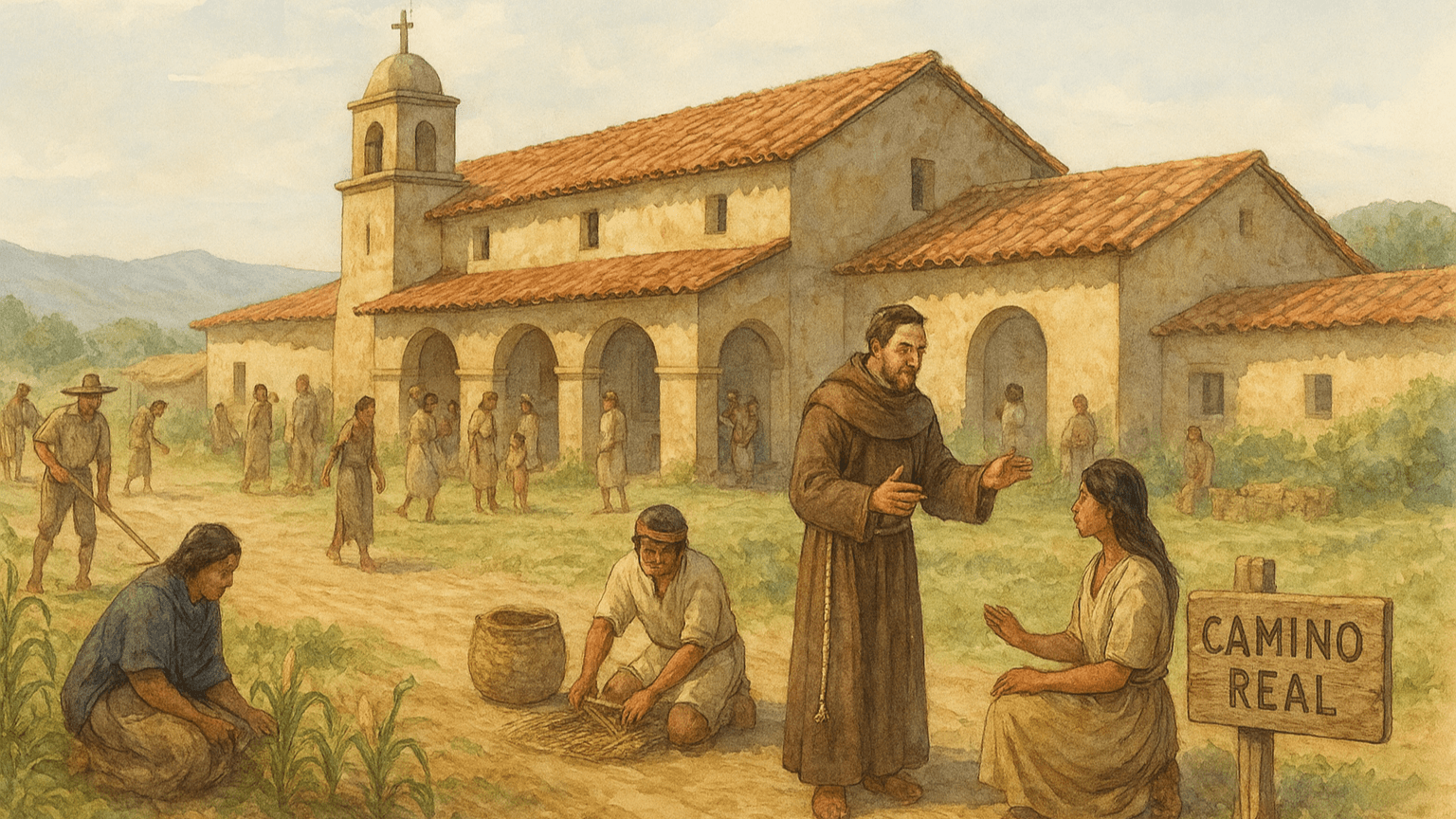
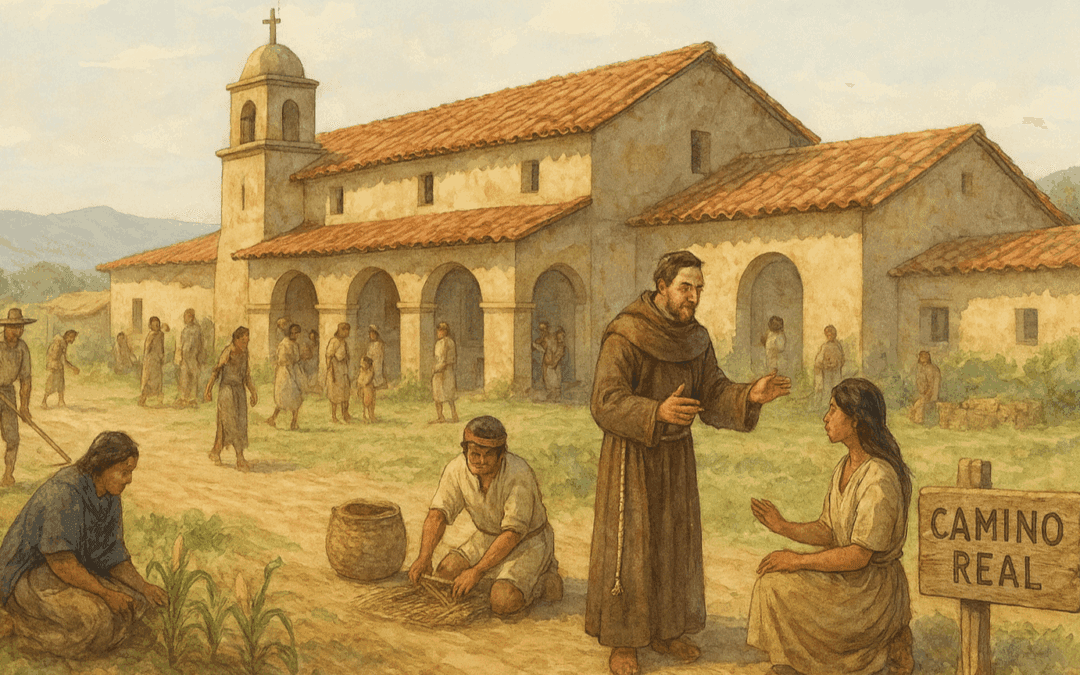
On March 28, 1787, a Spanish missionary named Father Luis Sales founded Misión San Miguel Arcángel de la Frontera. The words "de la Frontera" mean "of the frontier." This wasn't just a church; it was a boundary marker between two different parts of the Spanish empire. Eventually, this spot would even help decide where the border between the U.S. and Mexico was drawn.

Why Choose La Misión?

Father Sales didn't pick this spot by accident. He chose it for the same reasons the Kumeyaay people had lived here for 12,000 years: plenty of fresh water from the Río Guadalupe, fertile soil for farming, and a perfect location along the coast. It was a strategic "pit stop" for travelers moving between San Diego and missions further south.

Life at the Mission: A Massive Change

By the 1820s, nearly 400 people lived at the mission. This included Spanish priests and soldiers, but most were Kumeyaay people. For the Kumeyaay, joining the mission meant their entire world changed. They had to:

  • Stop Moving: They could no longer follow the seasons to hunt and gather; they had to stay in one place all year.
  • Work Differently: Instead of managing the land their own way, they had to farm European crops like wheat and barley and raise cattle and sheep.
  • Follow New Rules: They had to learn Spanish, wear European clothes, and live by the sound of mission bells instead of the rhythms of nature.

While some people joined the mission to survive or because they liked the new tools and technology, others resisted. Many fled to the mountains to keep their traditional way of life alive.

Building a New World

The mission was a busy place. Workers built large "adobe" buildings made of sun-dried mud bricks. They planted the very first vineyards in the area—the ancestors of today’s famous Baja wine industry! They also introduced olive trees, citrus fruits, and crafts like blacksmithing and leatherworking. This created a "hybrid" culture—a mix of Spanish tools and indigenous labor that changed the landscape forever.

The Highway of History

The mission sat right on the Camino Real (the Royal Road). This was the main "highway" of the time. If you drive Highway 1 today, you are following the same path used by Spanish soldiers in leather armor and messengers carrying letters that were months old. The mission provided food, a bed, and fresh horses for anyone traveling through the frontier.

When Nature Struck Back

In 1810, a massive flood on the Río Guadalupe destroyed the mission’s farmland. In Baja, the weather can be dry for years and then turn into a violent storm overnight. The flood was so bad that the community had to move north for a while to a place called El Descanso before they could return and rebuild "Old San Miguel." It was a tough lesson that nature is always in charge.

The End of the Mission

In 1821, Mexico won its independence from Spain. The new Mexican government wanted to take power away from the church. They passed laws to "secularize" the missions, meaning the land was supposed to be given back to the people. By 1834, Misión San Miguel was officially abandoned. The Kumeyaay who lived there had to find new ways to survive as the era of giant cattle ranches began.

The Legacy: What’s Left Today?

You can still see the weathered adobe walls of the mission today in the town of La Misión. These ruins are a reminder of a complicated time. The mission period lasted only 47 years, but it left a permanent mark:

  • New Food: Grapes, olives, and cattle became a permanent part of Baja.
  • Architecture: The style of buildings with courtyards and thick mud walls started here.
  • Religion: Many local families are still Catholic because of the mission's influence.

History isn't always simple or pretty. The mission period brought new technology, but it also brought diseases and took away the freedom of the indigenous people. When you walk past the ruins, you are looking at a place where two different worlds met and changed each other forever.

Family Roots & Cattle Country

Family Roots & Cattle Country

Rancho Days - Family Roots and Cattle Country (1862-1938)

Rancho Days: Family Roots and Cattle Country (1862–1938)

After the mission bells fell silent in 1834, La Misión entered a quieter but equally important chapter. This was the era of the great ranchos—a time when families established deep roots, cattle replaced mission livestock, and the region began to transform into the place we recognize today.

The Gap Years (1834–1862)

Between the mission closing and the first big rancho, the land was in a state of "limbo." In 1848, the Mexican-American War ended with the Treaty of Guadalupe Hidalgo. This treaty moved the border just a few miles north of La Misión. While California became part of the United States, Baja California remained part of Mexico. This made La Misión a true frontier town, sitting right at the edge of two different countries.

Enter the Crosthwaites: 1862

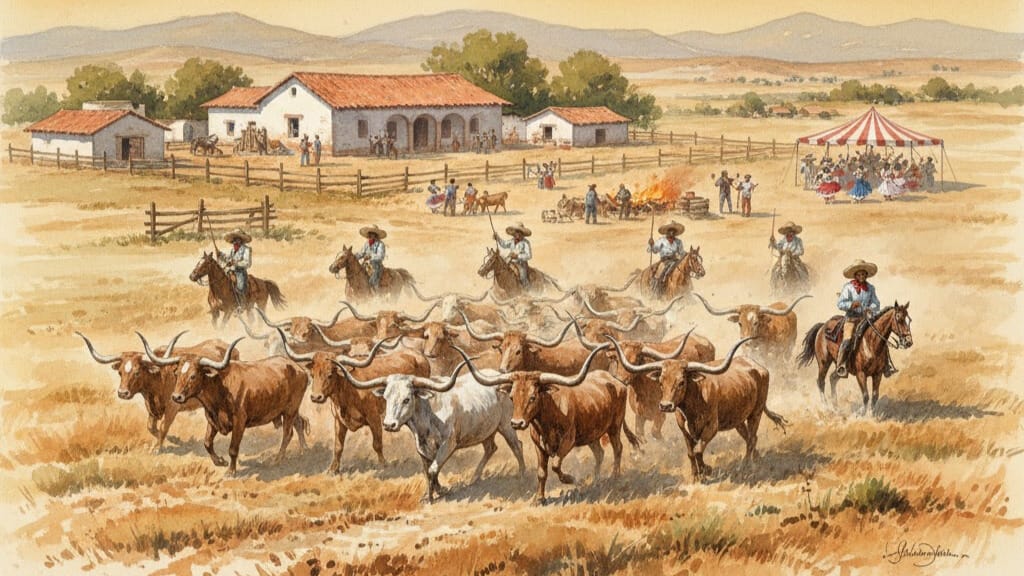
In 1862, a man named Felipe Crosthwaite Armstrong changed the history of the area forever. Felipe was a Mexican citizen of Irish descent—a perfect example of the "melting pot" of cultures in 19th-century Baja. He purchased about 18,500 acres of old mission land from the government and named it Rancho La Misión Vieja de San Miguel.

To give you an idea of the size, his ranch covered roughly 29 square miles! It stretched from the coast all the way into the eastern hills, including the entire valley where the river flows today.

The Vaquero Culture

The ranch was primarily cattle country. This was the golden age of the vaquero—the Mexican cowboy. These riders were famous for their incredible horsemanship. In fact, the American word "buckaroo" actually comes from the word "vaquero."

Life on the ranch followed the seasons:

  • Spring: Calving season and moving herds to fresh grass.
  • Summer: Driving cattle to markets.
  • Fall: Roundups and branding the cattle with the family mark.
  • Winter: Repairing gear and preparing for the next year.

This era also gave birth to the Baile Calabaceado, a high-energy folk dance inspired by the movements of cowboys. You can still see this dance performed every year at the Fiesta en La Misión!

Daily Life on the Ranch

The ranch was like a small, self-sufficient village. The main house was built of thick adobe bricks and surrounded by stables, a blacksmith shop, and homes for the workers.
While the men worked with cattle, the women managed the households, preserved food, and often kept the ranch's financial records. Children started helping with chores by age seven or eight, learning the skills they would need to run their own ranches one day.

The Crosthwaite Legacy

What makes the Crosthwaite story amazing is that the family is still here. Over 160 years later, descendants of Felipe Crosthwaite still live in La Misión. In a world where people move around constantly, this family has stayed through revolutions, border changes, and modern growth. Their presence is a living bridge to our past.

Land and Inequality

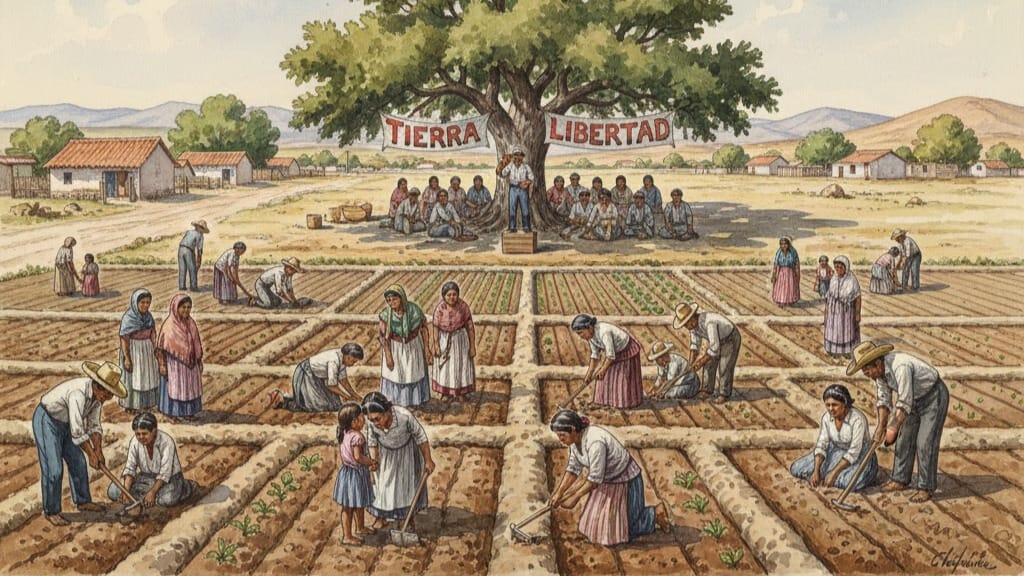
While ranch life sounds romantic, it had a darker side. A few powerful families owned almost all the land. The workers (vaqueros and laborers) usually owned nothing. They lived on the ranch and were paid small wages, often remaining in debt to the "company store." This gap between the rich landowners and the poor workers eventually led to the Mexican Revolution in 1910, as people across the country demanded "Tierra y Libertad" (Land and Liberty).

The Transition to the Ejido

By the 1930s, the era of the giant private ranchos was coming to an end. To fulfill the promises of the Revolution, the Mexican government began breaking up these massive estates to give land back to the people. In 1938, much of the Crosthwaite ranch was redistributed to create Ejido La Misión. This allowed local workers to own and farm the land as a community, which is how much of the valley is still organized today.

Why the Rancho Era Matters Today

The ranching days left a permanent mark on La Misión:

  • Agriculture: The ranchos improved irrigation and figured out which crops grew best in our specific soil.
  • Tradition: The music, cowboy skills, and dances we celebrate today started on these ranchos.
  • Identity: The sense of "rootedness" and family pride in La Misión comes directly from these early pioneers.

The rancho period was the bridge between the old mission days and the modern community we live in today. It was a time of hard work, skilled horsemanship, and the beginning of the local families that still call La Misión home.

The Ejido System

The Ejido System

Baja California - The beginning of time.

Land for Those Who Work It: The Ejido System (1938–Present)

In 1937, something revolutionary happened in La Misión—literally. The Mexican Revolution’s famous promise of "Tierra y Libertad" (Land and Liberty) finally arrived. After decades of land being owned by just a few wealthy ranching families, the government gave a group of local people permission to start Ejido La Misión. This changed everything about how people lived, worked, and owned land in our valley.

What Exactly is an Ejido?

An ejido is a uniquely Mexican way of owning land. It doesn't really exist in the U.S. or Europe. Think of it as a middle ground between owning a house and sharing a park. Here is how it works:

  • Communal Ownership: The land is granted by the government to a group of people called ejidatarios.
  • Right to Work: Individual families are given specific plots to farm or build a house on, but they don't "own" the dirt in the traditional way—they can't just sell it to a stranger on a whim.
  • Inheritance: You can pass the right to use the land down to your children, keeping the farm in the family for generations.
  • Shared Space: Large areas of the ejido remain "common land" where everyone can graze cattle or gather firewood.

Why Did Mexico Create This System?

Before the Mexican Revolution (1910), most land in Mexico was owned by massive estates called haciendas. The people who actually did the hard work of farming owned nothing and could be kicked off the land at any time. Revolutionary leaders like Emiliano Zapata fought to change this, arguing that the land should belong to "those who work it with their own hands." The ejido system was the solution to make sure farming families had a permanent, secure home.

Life in Ejido La Misión

When the ejido was formed in 1938, it took over much of the old Crosthwaite ranch. Suddenly, families who had been employees were now their own bosses.
Life in the mid-1900s was all about subsistence—growing what you need to survive. Families grew corn, beans, and vegetables, and they caught fish in the estuary. It was a life of hard work and dignity. Decisions weren't made by a boss, but by the Asamblea (a community meeting) where every ejidatario had a vote.

The Big Change in 1992

For over 50 years, ejido land could never be sold to outsiders. But in 1992, the Mexican government changed the law. They allowed ejidos to vote on whether they wanted to "privatize" their land.
This was a huge turning point for La Misión. Privatization meant that an ejidatario could turn their plot into a private title and sell it to anyone—including developers or international buyers.

This created two different paths for the land:

  1. The Village: Much of the center of La Misión stayed as part of the ejido, keeping its traditional Mexican character and local families.
  2. The Developments: Other areas (like the land where the LMPOA gated community sits) were privatized and sold, leading to the modern homes and vacation rentals we see today.

A Complicated Legacy

Today, La Misión is a "hybrid" community. You have long-time local families whose grandfathers fought for the right to farm this soil, living alongside newer residents who bought their property on the open market.
The ejido system is the reason our valley still has so much open green space and a strong sense of local culture. While the ranchos brought the families here, the ejido gave the community the power to stay.

Why It Matters Today

When you visit the local shops or walk through the village, you are in the heart of the ejido. Understanding this history helps us respect our neighbors. The families who have lived here since 1938 aren't just "locals"—they are the protectors of a revolutionary dream. By supporting local businesses and respecting the community’s shared spaces, we help keep that 12,000-year-old connection to the land alive.

Modern Era

Modern Era

Baja California - The beginning of time.

Modern Era: From Coastal Village to International Community (1979–Present)

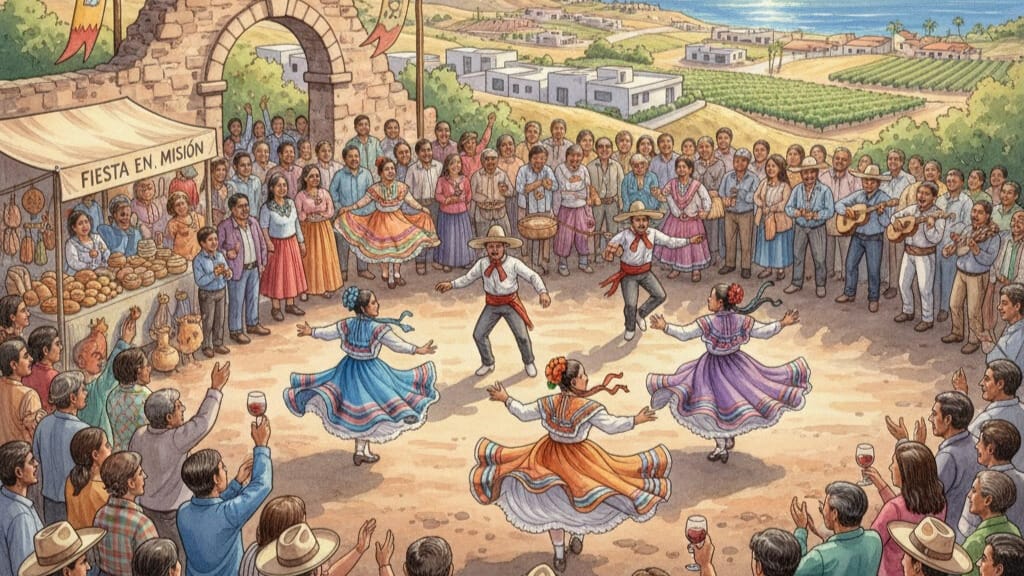
The modern story of La Misión isn’t about conquest—it’s about celebration. In 1979, a local teacher named Professor Mario Reyes Melendez started Fiesta en La Misión. He wanted people to take pride in the area’s 12,000-year history. What began as a small local party turned into a major event that put our village on the map.

The Birth of the "Calabaceado"

The star of the fiesta is the Baile Calabaceado. This is a high-energy cowboy dance that mimics the movements of animals (like jumping goats or bucking horses). La Misión is officially recognized as the birthplace of this dance! Every year in late May, people come from all over the world to see it. It’s a living connection to the old "Rancho" days when cowboys would gather to show off their skills.

The Wine Country Boom

While the village was celebrating its past, the nearby Valle de Guadalupe was exploding into fame. Just 30 minutes inland, the "Valle" became Mexico’s version of Napa Valley. Today, it has over 150 wineries and some of the best restaurants in the world.
Because everyone driving from the U.S. to the wine country passes right through our village, La Misión became known as the "Southern Gateway to Wine Country."

New Neighborhoods: Playa and Loma

As more people discovered La Misión, two main areas developed:

  • Playa La Misión: The beach area, which has kept its authentic "Baja vibe." It’s 2.5 kilometers of wide-open sand with no high-rise hotels.
  • Loma La Misión: The hillside area, which offers gated security and incredible views. This area attracted many international buyers, especially from Southern California, looking for a beautiful and affordable place to retire or work remotely.

The Rise of the LMPOA

With more international residents moving in, the La Misión Property Owners Association (LMPOA) was formed. This group helps coordinate things like security, road repairs, and community events. It acts as a bridge between the different groups living here, helping English and Spanish speakers work together to keep the community safe and beautiful.

The Cross-Border Lifestyle

Many people in La Misión live a "bi-national" life. They might shop and see doctors in San Diego, but they live and relax in Mexico. This hybrid culture is unique—we aren't quite "American" or fully "Mexican," but something in between.
With the arrival of high-speed fiber-optic internet, a new generation of "digital nomads" and remote workers has moved in, proving you don't have to be retired to enjoy life at the beach.

Challenges for the Future

Growth brings questions that we have to answer together:

  • Environment: How do we protect the river estuary and the beach as more houses are built?
  • Inequality: How do we make sure that development benefits everyone, including the original families in the village?
  • Culture: How do we keep the "small-town" feel while welcoming thousands of visitors every year?

What Makes La Misión Special?

Even with all the changes, La Misión is still a place of raw natural beauty. You can still hike the hills, surf the waves, and walk the beach without seeing crowds. We have world-class wine next door, but we still have a quiet village where traditions like the Calabaceado are passed down to the kids.

Your Part in the Story

If you are here, you are now part of this 12,000-year-old story. Whether you are a "snowbird" visiting for the winter or someone whose family has been here for centuries, you have a role to play.
By supporting local shops, learning a bit of Spanish, and respecting the environment, you help make sure the next chapter of La Misión is as great as the ones that came before.